


Getting interrupted can be frustrating, especially when you’re trying to explain an important point or tell a story. Instead of getting angry or making the situation awkward, a little humor can help you regain the conversation without creating tension. That’s why knowing Funny Things to Say When Someone Interrupts You can make everyday conversations much smoother.
Whether you’re talking to friends, family, coworkers, or even strangers, the right response can keep the mood light while reminding others to let you finish. In this guide, you’ll discover plenty of Funny Things to Say When Someone Interrupts You, along with practical tips for handling interruptions confidently and respectfully.
Why People Interrupt and What It Usually Means
Not every interruption is meant to be rude. People interrupt for many different reasons, and understanding those reasons helps you choose the best response instead of reacting emotionally.
Excitement vs Habit vs Dominance
Some people interrupt because they’re genuinely excited. They want to join the conversation before they forget what they were going to say.
Others simply have a habit of talking over people. They may not even realize they’re doing it because they’ve communicated that way for years.
Then there are people who interrupt to control the conversation. They may want attention, disagree with your point, or try to establish authority. In these situations, using one of the Funny Things to Say When Someone Interrupts You can lighten the mood while making your point clear.
When Interruptions Are Accidental
Accidental interruptions happen all the time, especially during fast-paced conversations.
Common reasons include:
- Both people start speaking at the same time.
- Someone assumes you’ve finished your sentence.
- Online meetings create audio delays.
- The speaker misreads a pause as the end of your thought.
In these cases, there’s usually no need to be upset. A smile and a friendly comment are often enough.
When It’s a Pattern You Should Address
If someone interrupts you repeatedly, it’s no longer just bad timing.
Signs it’s becoming a pattern include:
- They rarely let you complete a sentence.
- They frequently change the topic.
- They answer questions directed at you.
- They speak louder whenever you begin talking.
When this happens consistently, it’s worth addressing respectfully instead of ignoring it.
How to Respond Without Sounding Rude
Responding well isn’t just about the words you choose. Your tone and body language matter just as much.
Calm Body Language and Tone
Stay relaxed even if you’re annoyed.
Good communication habits include:
- Keep your shoulders relaxed.
- Maintain comfortable eye contact.
- Smile when appropriate.
- Speak at a steady pace.
- Avoid raising your voice.
People are much more likely to listen when you stay calm.
Short Phrases That Reset the Room
Simple phrases often work better than long explanations.
Try saying:
- “Give me just one more second.”
- “Let me finish this thought.”
- “I’m almost done.”
- “I’ll come back to your point next.”
- “Hang on—I promise I’m getting there.”
These responses redirect the conversation without embarrassing anyone.
When to Use Humor vs When to Be Direct
Humor works best when:
- You’re talking with friends.
- The interruption wasn’t intentional.
- The mood is already relaxed.
- Everyone enjoys playful conversations.
Being direct is better when:
- The interruptions happen repeatedly.
- You’re in a serious discussion.
- The person ignores subtle hints.
- Professional communication is important.
Choosing the right approach makes every response more effective.
Funny Things to Say When Someone Interrupts You
A funny response can stop an interruption without making the conversation uncomfortable. The goal isn’t to embarrass the other person—it’s to remind them, with a smile, that you weren’t finished speaking. Below are plenty of Funny Things to Say When Someone Interrupts You that work in different situations.
Quick One-Liners
Use these when you want a fast, witty reply.
- “Oops, my sentence accidentally walked into yours.”
- “Spoiler alert—I wasn’t done yet.”
- “Hang on, my story still has an ending.”
- “Can I finish this episode first?”
- “You’re reading ahead in the conversation.”
- “My words were still buffering.”
- “Give me one more sentence before the sequel.”
- “I promise the ending is worth waiting for.”
- “You skipped my favorite part.”
- “This conversation has commercials now?”
Light, Playful Lines
These responses are perfect for casual chats with people you know well.
- “I’ll rent you the microphone in a minute.”
- “You’re clearly excited, but let me catch up.”
- “Save that thought—I want to hear it after I’m done.”
- “Looks like we’re competing for airtime.”
- “Easy there, the conversation isn’t a race.”
- “You’re making my pause work overtime.”
- “One at a time—my brain only has one audio channel.”
- “Don’t worry, your turn is coming.”
- “You’re stealing tomorrow’s conversation today.”
- “I appreciate the enthusiasm!”
Funny Ways to Say “Let Me Finish”
If you want humor without sounding sarcastic, try these.
- “Allow me to land the plane first.”
- “Let me cross the finish line.”
- “One last sentence and I’m all ears.”
- “The plot twist is almost here.”
- “My thought is halfway cooked.”
- “Can I finish downloading this idea?”
- “Just one more chapter.”
- “I’m almost at the period.”
- “The credits haven’t rolled yet.”
- “Give me ten seconds, then the stage is yours.”
Polite but Firm Things to Say When Someone Talks Over You
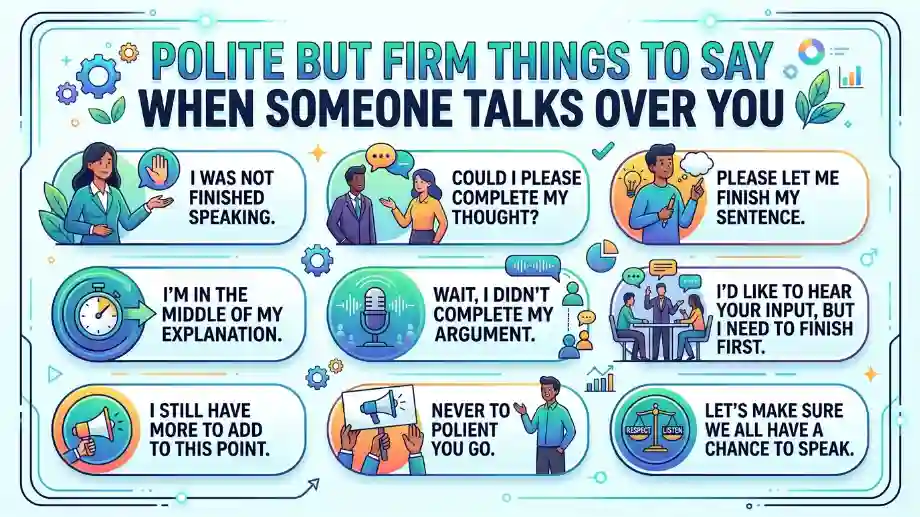
Sometimes humor isn’t the right choice. A polite but confident response shows respect while protecting your chance to speak.
Respectful Phrases
These work in almost any setting.
- “I’d like to finish my point first.”
- “Please let me complete my thought.”
- “I’ll listen as soon as I’m finished.”
- “Can I finish before we move on?”
- “I’d appreciate a moment to wrap this up.”
- “I wasn’t quite done yet.”
- “Let me finish, then I’d love your opinion.”
- “Just a second, please.”
“Let Me Finish” Alternatives
Avoid repeating the same phrase every time.
- “Let me finish this idea.”
- “I’m almost there.”
- “There’s one more point I’d like to make.”
- “I’ll be brief.”
- “Just one final thought.”
- “I’d like to complete my sentence.”
- “Hold on for a moment.”
- “I’ll hand it over in just a second.”
Lines That Work with Strangers and Coworkers
Professional conversations call for calm and respectful wording.
- “I’d appreciate the chance to finish.”
- “If I could complete my point first.”
- “I’d like to add one final detail.”
- “May I continue?”
- “Let’s take turns so we don’t miss anything.”
- “I’ll finish quickly.”
- “Thanks for waiting.”
- “I think this will make more sense once I finish.”
Witty Comebacks for Friends and Family
People you’re close to usually appreciate playful teasing, as long as it’s friendly.
Teasing Lines That Won’t Start a Fight
- “Did my sentence interrupt your interruption?”
- “You deserve an award for fastest reply.”
- “You guessed the ending before I told the story.”
- “Hold your horses—I’m still talking.”
- “You’re speed-running this conversation.”
- “Can my words catch their breath?”
- “You’re one step ahead of my mouth.”
- “Let me unlock the next level first.”
Playful Boundaries
You can keep things light while setting expectations.
- Smile before responding.
- Pause instead of talking louder.
- Finish your sentence confidently.
- Acknowledge their excitement.
- Redirect the conversation back to your point.
- Keep your voice calm.
- Avoid sounding defensive.
- Stay consistent if interruptions continue.
When to Switch from Funny to Direct
Humor doesn’t always solve the problem.
Be more direct when:
- The interruptions happen every conversation.
- Someone dismisses your ideas.
- The discussion is serious.
- Your work or reputation is affected.
- You’ve already joked about it several times.
- The person ignores polite hints.
Funny Comebacks for the Workplace
Workplace conversations require a balance between confidence and professionalism. A light joke can ease the tension, but it should never make a coworker feel embarrassed. These responses help you keep meetings productive while still standing your ground.
Meeting-Safe Lines
These work well during presentations, brainstorming sessions, and team meetings.
- “Let me park this thought before we switch lanes.”
- “I’ll wrap this up, then I’d love to hear your idea.”
- “I’m almost at the important part.”
- “Give me another ten seconds.”
- “Let’s finish one thought before we start another.”
- “I’ll hand the floor over in just a moment.”
- “There’s one final point I’d like to make.”
- “Hang on—I think this connects to your idea.”
Slack/Teams-Friendly Responses
Text conversations can become chaotic when multiple people reply at once.
Use messages like:
- “Let me finish my thought in this thread.”
- “One more message, then I’m done.”
- “I promise I’m getting to your question.”
- “I’ll answer that right after this.”
- “Thanks! Let me complete this first.”
- “Hold that thought—I think we’re saying similar things.”
- “Almost finished typing.”
- “Just adding the last detail.”
Professional but Not Stiff
You don’t always need a joke. These responses sound confident without being overly formal.
- “I’d like to complete my explanation.”
- “May I finish before we move on?”
- “I’d appreciate a chance to finish.”
- “Let’s take one point at a time.”
- “I’ll be brief.”
- “Thanks for your patience.”
- “I’d like to finish this idea first.”
- “Then I’d be happy to hear your perspective.”
When Someone Interrupts You Repeatedly
A single interruption is easy to overlook. Constant interruptions, however, deserve a thoughtful response.
Pattern-Breaking Phrases
Instead of reacting emotionally, calmly redirect the conversation.
- “I’d like to finish before we change topics.”
- “Please let me complete my point.”
- “I think this will answer your question.”
- “Just one moment.”
- “I’d appreciate the chance to finish.”
- “I’ll come to your point next.”
- “I’m almost done.”
- “Let’s hear each other out.”
Calling It Out Calmly
If interruptions continue, address the behavior directly.
Helpful phrases include:
- “I’ve noticed I’m often interrupted before I finish.”
- “Can we take turns speaking?”
- “I’d appreciate finishing my thoughts.”
- “I value your ideas, and I’d like the same opportunity.”
- “Let’s make sure everyone gets a chance.”
- “I’d like to complete my sentence before responding.”
Setting a Boundary Without Escalation
Boundaries don’t have to sound confrontational.
You can say:
- “I’d like to finish speaking first.”
- “Please give me a moment.”
- “Then I’m happy to hear your view.”
- “Let’s avoid talking over each other.”
- “That helps me explain things more clearly.”
- “Thanks for understanding.”
When Someone Interrupts You in a Group Conversation
Group discussions can move quickly, making interruptions more common. The key is to reclaim the conversation without competing for volume.
How to Reclaim the Floor
- Pause briefly instead of speaking louder.
- Continue your sentence confidently.
- Use the person’s name if appropriate.
- Keep your voice steady.
- Return to your original point.
- Maintain eye contact with the group.
Redirecting Back to Your Point
These phrases help bring the conversation back naturally.
- “As I was saying…”
- “To finish my thought…”
- “Coming back to my point…”
- “Before we move on…”
- “One last thing I’d like to add…”
- “That connects to what I was explaining.”
Getting Support from the Room
Sometimes others will help if you remain composed.
Ways to encourage that include:
- Stay respectful.
- Avoid interrupting back.
- Thank people who let you finish.
- Keep your comments concise.
- Listen carefully when it’s their turn.
- Create a conversation where everyone feels heard.
When Someone Interrupts You Mid-Sentence
Being interrupted halfway through a sentence can throw off your train of thought. Staying composed helps you regain control more effectively than raising your voice.
Short Interrupt-Stoppers
These brief responses work in almost any setting.
- “One second.”
- “Almost finished.”
- “Let me finish this thought.”
- “Hang on.”
- “Just one more sentence.”
- “Give me a moment.”
- “I’m nearly done.”
- “Then it’s all yours.”
“Hold That Thought” Alternatives
Try these instead of repeating the same phrase every time.
- “Keep that idea for just a second.”
- “Don’t let that thought disappear.”
- “I’ll come right back to you.”
- “Let’s circle back in a moment.”
- “I want to hear that next.”
- “That’s coming up.”
- “We’ll get there in a second.”
- “I haven’t forgotten your point.”
Staying Confident Without Raising Your Voice
Strong communication is about control, not volume.
Remember to:
- Speak clearly.
- Finish your sentence naturally.
- Avoid rushing.
- Stay relaxed.
- Maintain eye contact.
- Don’t apologize for speaking.
- Keep your tone friendly.
- Trust that your point deserves to be heard.
If You Want to Be Direct Instead of Funny
Humor can make interruptions less awkward, but there are times when a clear and straightforward response is the better choice. If someone keeps talking over you despite your polite hints, being direct is both reasonable and respectful.
Clear Phrases That Shut Interruptions Down
These responses are simple, professional, and leave little room for confusion.
- “I’d like to finish my thought first.”
- “Please let me complete my sentence.”
- “I’ll listen once I’m finished.”
- “I’d appreciate not being interrupted.”
- “Can we take turns speaking?”
- “I’d like the chance to finish before we move on.”
- “Please give me a moment to finish.”
- “Then I’m happy to hear your perspective.”
Assertive but Respectful Wording
Being assertive doesn’t mean sounding aggressive. The goal is to communicate your needs without creating unnecessary conflict.
Keep these tips in mind:
- Speak with a calm voice.
- Be clear instead of apologetic.
- Use short, confident sentences.
- Focus on the behavior, not the person.
- Avoid sarcasm in serious situations.
- Listen carefully once you’ve finished speaking.
- Stay consistent if interruptions continue.
- Keep your emotions under control.
Handling Pushback
Sometimes the other person may insist they were “just trying to help” or continue interrupting anyway.
Here’s how to respond:
- Repeat your request calmly.
- Don’t argue over their intentions.
- Bring the conversation back to your original point.
- Stay polite but firm.
- Avoid matching their tone.
- End the discussion if it becomes unproductive.
Delivery Tips That Make Any Line Work
Even the best response can fall flat if it’s delivered poorly. Your tone, timing, and body language often have a bigger impact than the words themselves.
Tone, Timing, and Pacing
A confident delivery makes your response more effective.
Remember to:
- Speak at a steady pace.
- Pause briefly before replying.
- Avoid sounding rushed.
- Use a friendly tone whenever possible.
- Keep your response concise.
- Finish your thought before changing topics.
Eye Contact and Posture
Confident body language reinforces your message.
Practice these habits:
- Maintain natural eye contact.
- Sit or stand upright.
- Keep your shoulders relaxed.
- Avoid crossing your arms defensively.
- Face the person you’re speaking to.
- Smile when the situation calls for it.
What to Do If They Keep Going
If someone repeatedly interrupts despite your efforts, don’t get pulled into a speaking contest.
Instead:
- Pause and wait for silence.
- Resume exactly where you left off.
- Repeat your boundary if needed.
- Stay calm throughout the conversation.
- Address the issue privately if appropriate.
- Know when it’s best to end the discussion.
Common Mistakes to Avoid
Responding well is just as much about avoiding bad habits as it is about choosing the right words.
Overusing Sarcasm
Sarcasm might earn a laugh once, but repeated use can make you seem defensive or passive-aggressive.
Instead:
- Save sarcasm for close friends who understand your humor.
- Choose lighthearted jokes over sharp remarks.
- Match your response to the situation.
- Keep respect at the center of the conversation.
Apologizing for Speaking
Many people unintentionally weaken their message by saying things like, “Sorry, but…”
Avoid apologizing simply because you want to finish your sentence.
Replace it with confident alternatives such as:
- “I’d like to finish my point.”
- “One more thought.”
- “Let me complete this idea.”
- “Then I’m happy to listen.”
Letting It Slide Every Time
Ignoring constant interruptions teaches people that it’s acceptable to talk over you.
A better approach is to:
- Address the behavior early.
- Stay polite but consistent.
- Speak up without feeling guilty.
- Reinforce healthy conversation habits.
- Encourage balanced discussions.
- Respect your own voice as much as you respect others’.
Conclusion
Knowing Funny Things to Say When Someone Interrupts You gives you more than a list of clever comebacks—it helps you communicate with confidence. Whether you choose humor, a polite reminder, or a direct response, the key is staying calm and speaking with confidence. The right words, paired with good timing and respectful body language, can help you finish your thoughts while keeping every conversation positive and productive.
FAQs
1. What are some Funny Things to Say When Someone Interrupts You?
You can say things like “Hold on, my sentence isn’t finished yet,” “The ending is the best part,” or “Let me land the plane first.” These lighthearted responses help you reclaim the conversation without sounding rude.
2. Is it rude to tell someone to stop interrupting?
No. As long as you stay calm and respectful, it’s perfectly acceptable to ask someone to let you finish speaking.
3. Should I use humor in professional meetings?
Yes, but only when it fits the situation. In formal meetings, a polite and confident response is usually more appropriate than a joke.
4. Why do people interrupt during conversations?
People interrupt for many reasons, including excitement, habit, impatience, misunderstanding a pause, or wanting to control the discussion.
5. What’s the best way to respond if someone interrupts me all the time?
Stay consistent. Politely remind them that you’d like to finish your point, and if the behavior continues, have a respectful conversation about it privately.
